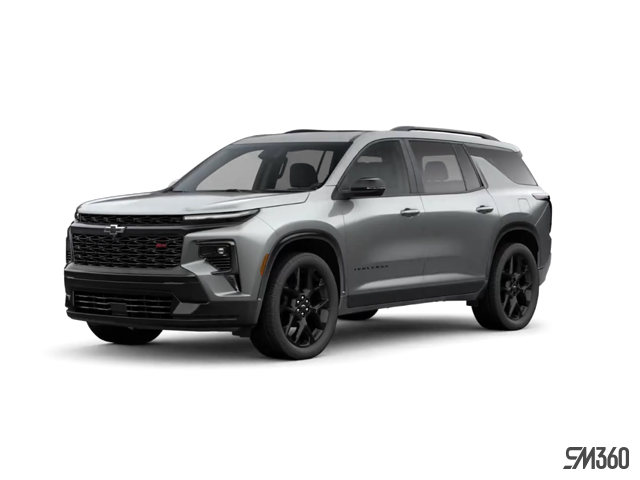
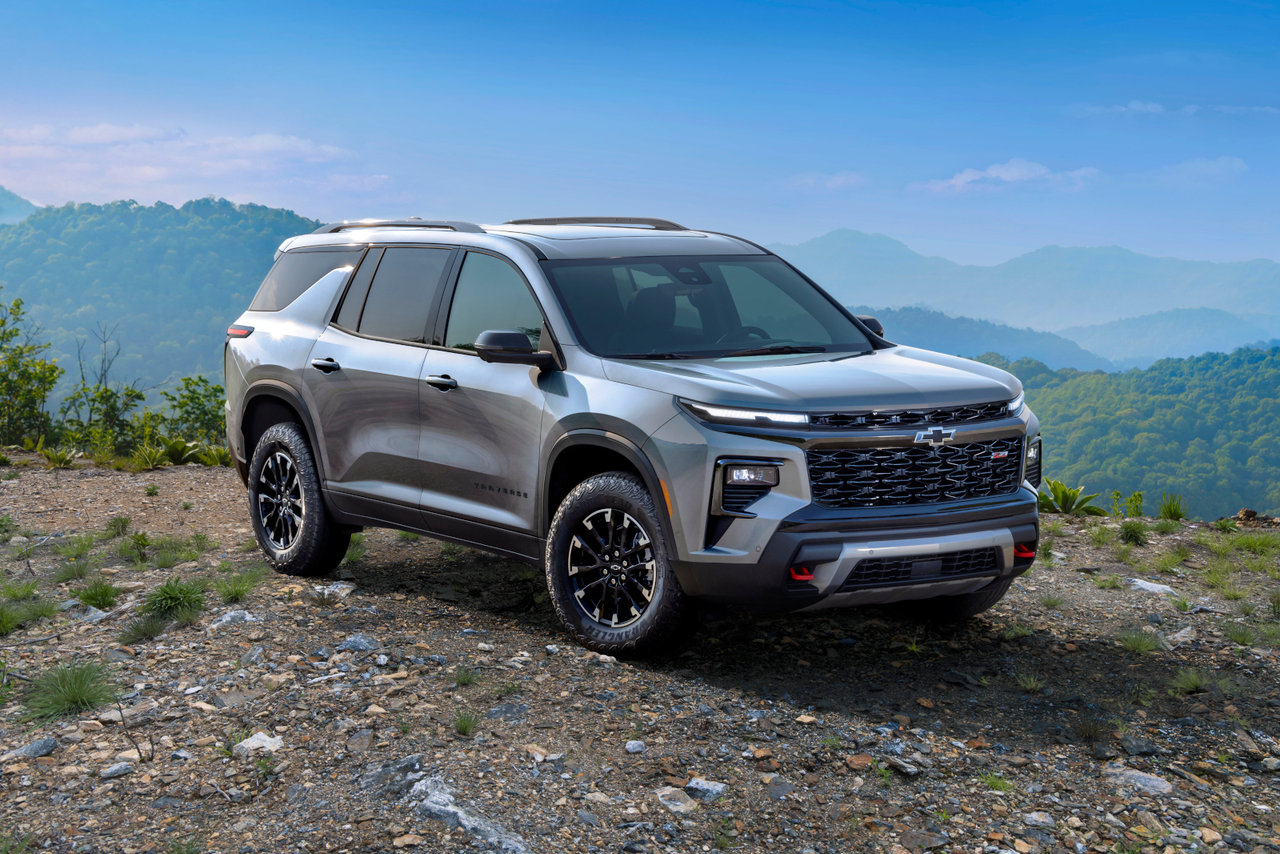
A week away with the whole family means seven seats full and a trunk that still has to swallow a week’s worth of bags. For Quebec families planning a summer getaway, the question isn’t whether the 2026 Chevrolet Traverse has cargo room. It’s whether that room works when every seat is occupied and nobody wants to play luggage Tetris in a parking lot.
Why The Third Row Changes The Packing Plan
Most cargo numbers you see for a three-row SUV assume the third row is folded flat. That’s not useful if you’re actually using all seven seats for a family trip. With the Traverse’s third row up, the cargo area behind it measures 648 L, a very different number than the 2,775.1 L you get with every seat folded down.
That 648 L space sits behind the third-row seatbacks, so it’s shaped more like a deep box than a wide, flat floor. Anything you load has to go in vertically or stack front-to-back rather than side-to-side, and the third-row seatbacks limit how far forward you can slide bigger items.
What Actually Fits Behind The Third Row
Think of the 648 L cargo area in layers, not as one big open bin. The deepest, flattest section sits right against the liftgate opening, and that’s where the bulkiest items belong first.
- Load first: rigid suitcases and coolers, placed flat against the floor where the space is deepest
- Load next: duffel bags and soft-sided luggage, which compress to fill gaps around the rigid pieces
- Load last: backpacks, jackets, and anything passengers want within arm’s reach for the drive
Soft-sided bags earn their keep here. A hard case that doesn’t fit the available shape wastes space around it, while a duffel bag flexes into the corners a suitcase can’t reach. If your group leans toward hard-shell luggage, plan on one bag per person rather than a full set, and let smaller soft bags fill what’s left.
The AutoSense power liftgate, standard across the lineup, makes the loading process itself easier when your hands are already full of bags. An available retractable cargo shade and cargo mat also help keep loose items from sliding around once the third row is packed to the roofline.
Passenger Comfort Matters As Much As Cargo Room

A week-long trip means hours on the highway with seven people in the vehicle, and that’s where the Traverse’s cabin dimensions matter. Third-row legroom measures 32.1 in, with 38.3 in of headroom, numbers that make the back seat usable for teens and adults on a real road trip, not just a quick school run.
Tri-zone automatic climate control is standard, so the third row isn’t stuck with whatever temperature the front seats picked. Rear climate controls let passengers in the back adjust their own zone, which matters more on a five-hour drive to the cottage than it does on a ten-minute errand.
Who Gets The Most Out Of A Fully-Loaded Traverse
The family that benefits most from this setup is the one that genuinely needs seven seats and refuses to leave anyone behind for the trip. If you’re driving grandparents to the airport, running a full carload to a cottage for the week, or taking the extended family on a summer road trip, the 648 L behind the third row is enough for compact luggage, groceries, and a cooler, provided everyone packs light and smart.
A group hauling bulky gear such as full-size hockey bags, large coolers, or bikes should plan differently. That’s where folding the third row down and freeing up the much larger 1,603 L cargo area to the second row, or the full 2,775.1 L with every seat folded, makes more sense than trying to force oversized items into the smaller space behind an upright third row.
Planning Around The Tradeoffs
Some trips simply need a decision: seven passengers with modest luggage, or fewer passengers with more gear. If your week away includes bulky equipment alongside a full passenger load, consider whether one or two third-row seats can fold while the rest of the family rides in the second row.
Groceries, coolers, and smaller travel accessories are the easiest wins for that 648 L space since they pack into irregular gaps that suitcases can’t use efficiently. Save the third row itself for people, and let the cargo area behind it handle the smaller, softer, more flexible items that round out a week’s packing list.
Seeing The Fit In Person
The 2026 Traverse is built to keep seven-passenger comfort and a week’s worth of luggage working together, without forcing a choice between the two on most family trips. Understanding how the cargo area behind the third row actually loads makes the difference between a smooth departure and a driveway repack.
Visit Chevrolet Buick GMC de l’Île-Perrot in Pincourt to see the 2026 Traverse’s cargo area with all three rows raised and bring your actual luggage to test the fit before your next trip.